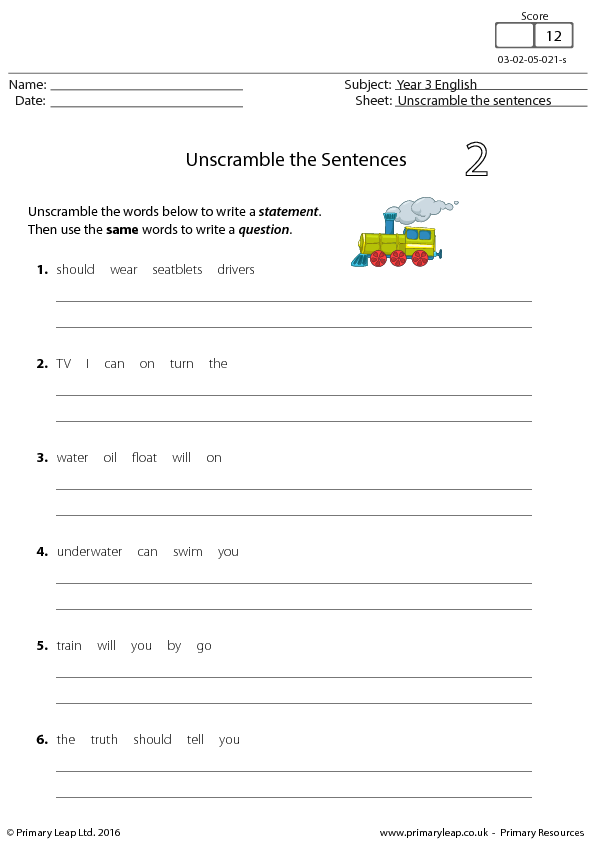
When you students struggle with word order, take the time to review this with them using one of the 101 word order worksheets available in this section. Browse through this section to find something that your students will enjoy or use these worksheets as a basis for your own. Here is a resource to refer to when talking about word order. The material may be a little overwhelming for your students but the scrambled sentences on the last three pages can be great practice if students have difficulties with word order. There are other scrambled sentences and word order worksheets to look at as well as an article that talks about teaching word order so stick around and explore all that Busy Teacher has to offer.
There are many common word order mistakes that English language learners make even as their overall fluency and level increase. You cannot stress the importance of word order enough so be sure that students understand the position of words in a target structure before sending them off to do practice activities. Not everyone supports the idea of giving students incorrect material but this would be one method of checking to see if students understand correct word order. You could create a worksheet with some incorrect sentences and ask students to make corrections to them. To make this more challenging, ask students to correct the incorrect sentences and include some sentences without errors so they have to be even more attentive when reading. Of course the best method of teaching word order is to include it in your introductions; take preventative measures when it comes to word order and you will have fewer problems to deal with later on in the course.
Create awesome-looking custom word searches in seconds!
Make A Word Scramble:
Instantly create custom word/sentence scrambles for your class!
Make A Double Puzzle:
Generate double puzzles your students will love - hours of fun!
ESL Articles
View our latest knowledgebase articles that will help you become a better English teacher. Learn from
professional teachers and put a bit of your own creativity into it!
In linguistics, word order typology refers to the study of the order of the syntactic constituents of a language, and how different languages can employ different orders. Correlations between orders found in different syntactic subdomains are also of interest. The primary word orders that are of interest are the constituent order of a clause—the relative order of subject, object, and verb; the order of modifiers (adjectives, numerals, demonstratives, possessives, and adjuncts) in a noun phrase; and the order of adverbials. Some languages have relatively restrictive word orders, often relying on the order of constituents to convey important grammatical information. Others, often those that convey grammatical information through inflection, allow more flexibility which can be used to encode pragmatic information such as topicalisation or focus. Most languages however have some preferred word order which is used most frequently...
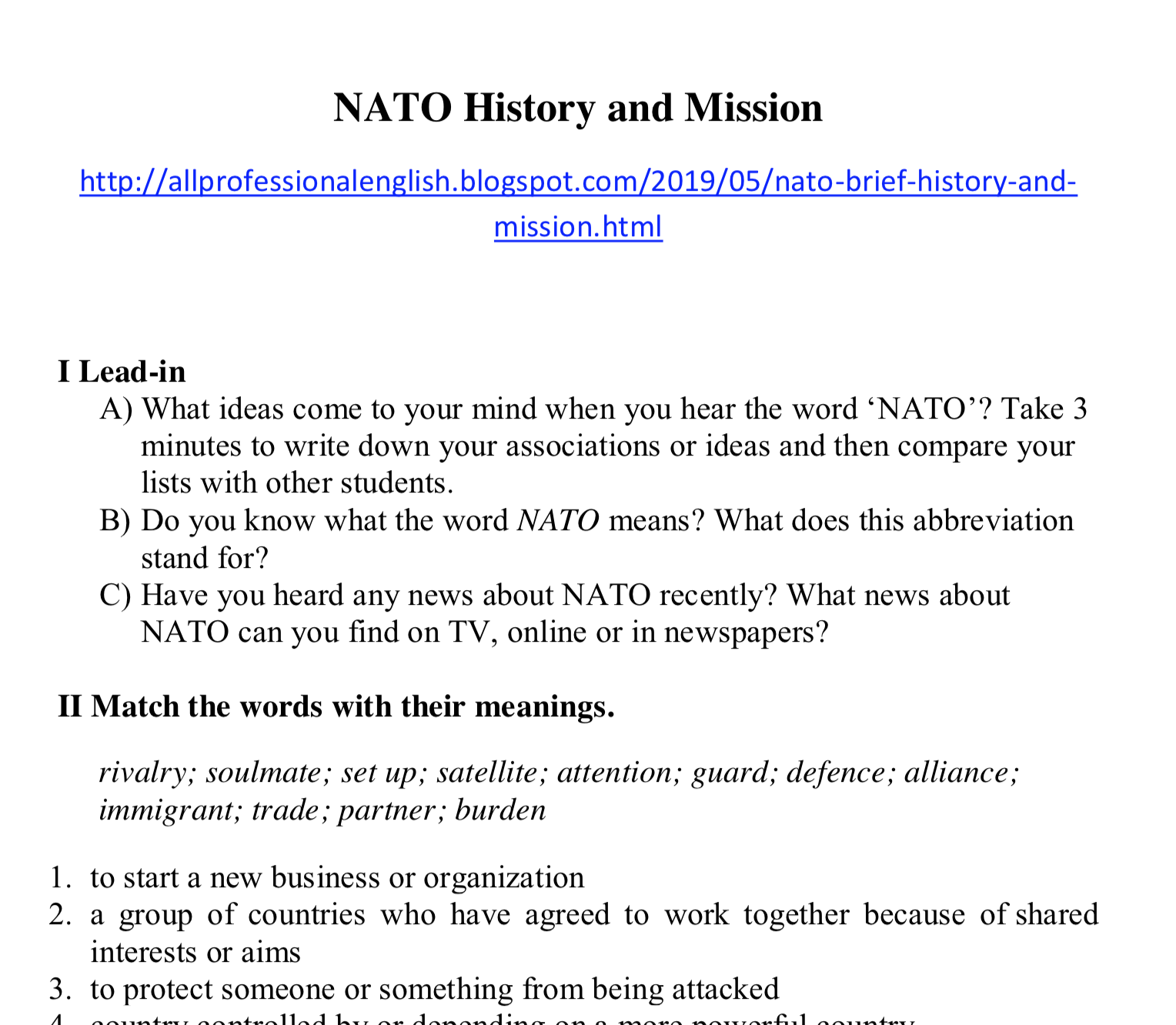
The task is based on the video explaining the key functions of NATO today and introducing the history of the organization. Vocabulary assignments focus on collocations and dependent pre ...
Students listen to the video of Swan Song by Dua Lipa, work on their listening skills and examine the importance of speaking their minds. This worksheet includes a variety of activities ...
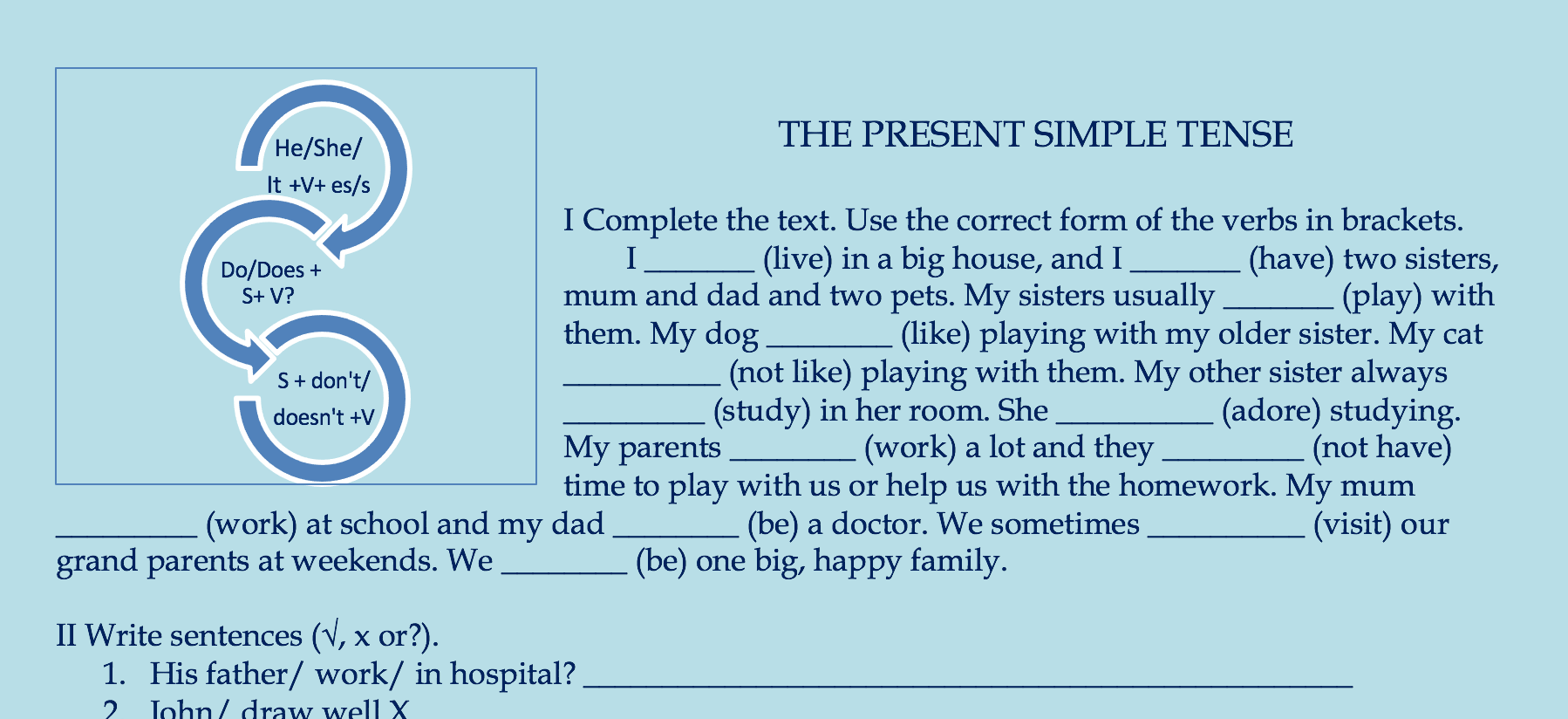
This resource has a few exercises to practise the Present Simple Tense. It is appropriate for revision and learning the rules concerning tense and the position of adverbs in a sentence.& ...
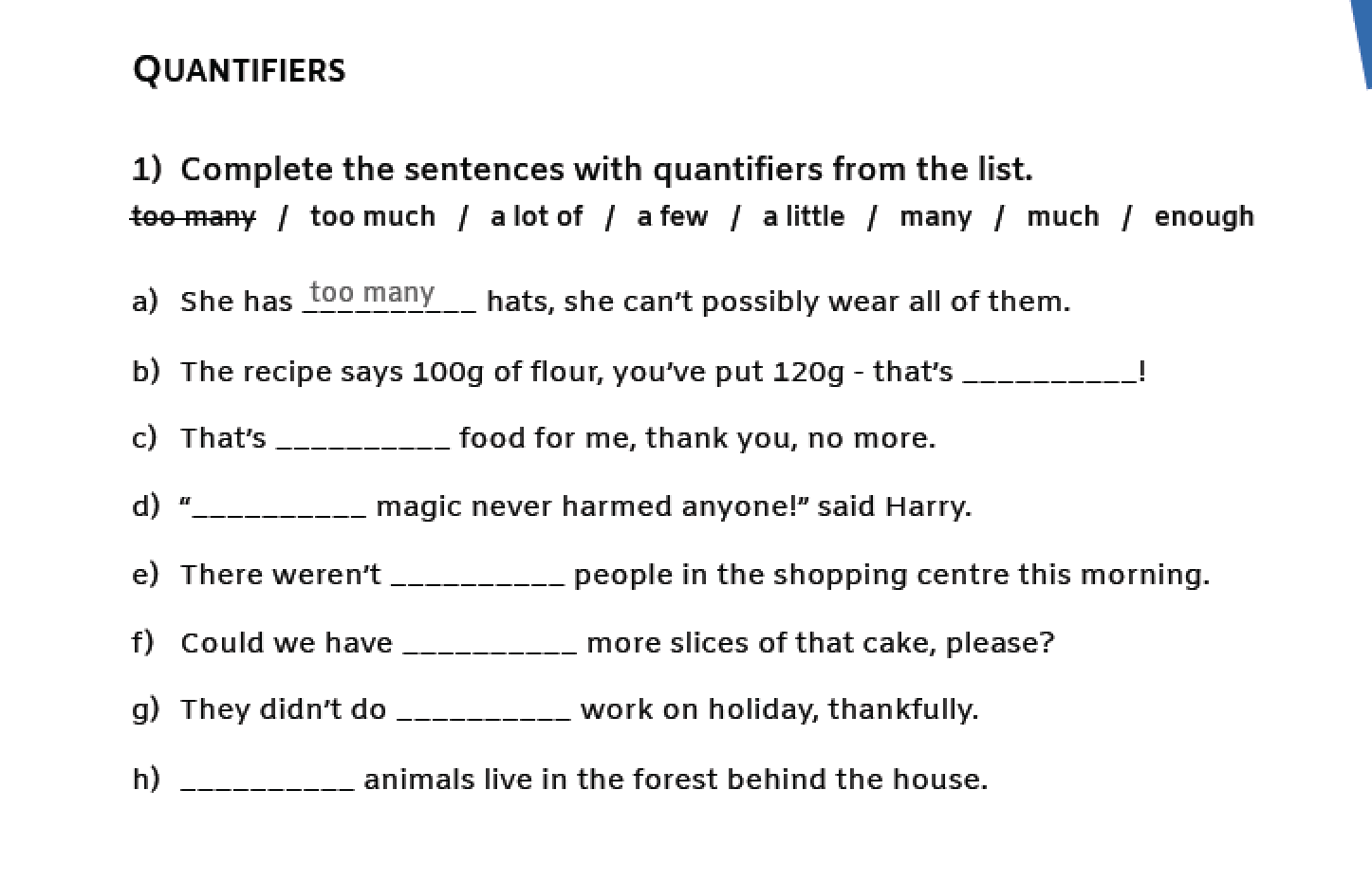
In this worksheet, students practise the function of the following quantifiers: a lot of, too many, too much, a few, a little, many, much, enough and use them in context. An answer key i ...
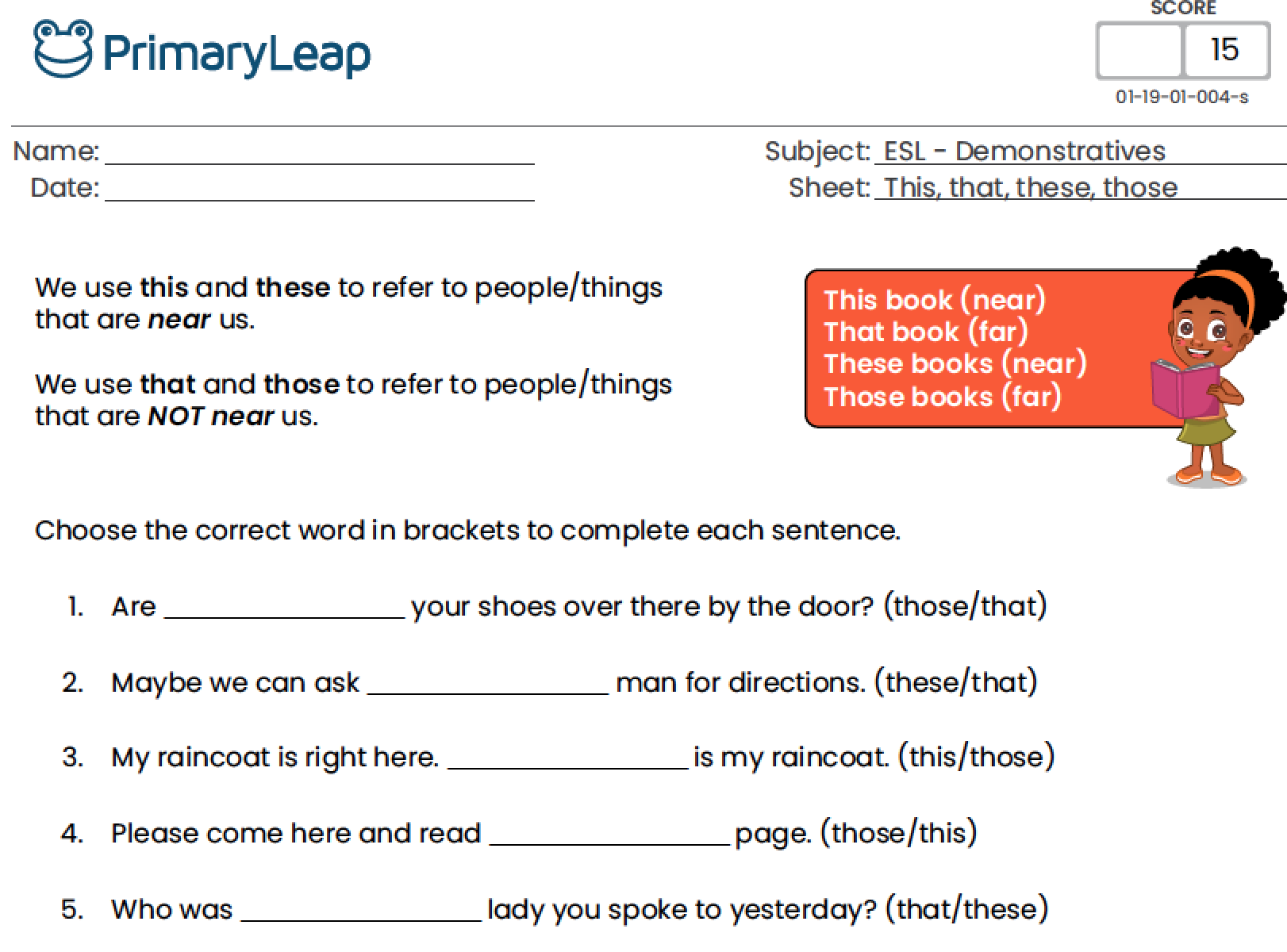
We use demonstrative pronouns like this and these to refer to people/things that are near us. We use that and those to refer to people/things that are NOT near us. Students choose t ...
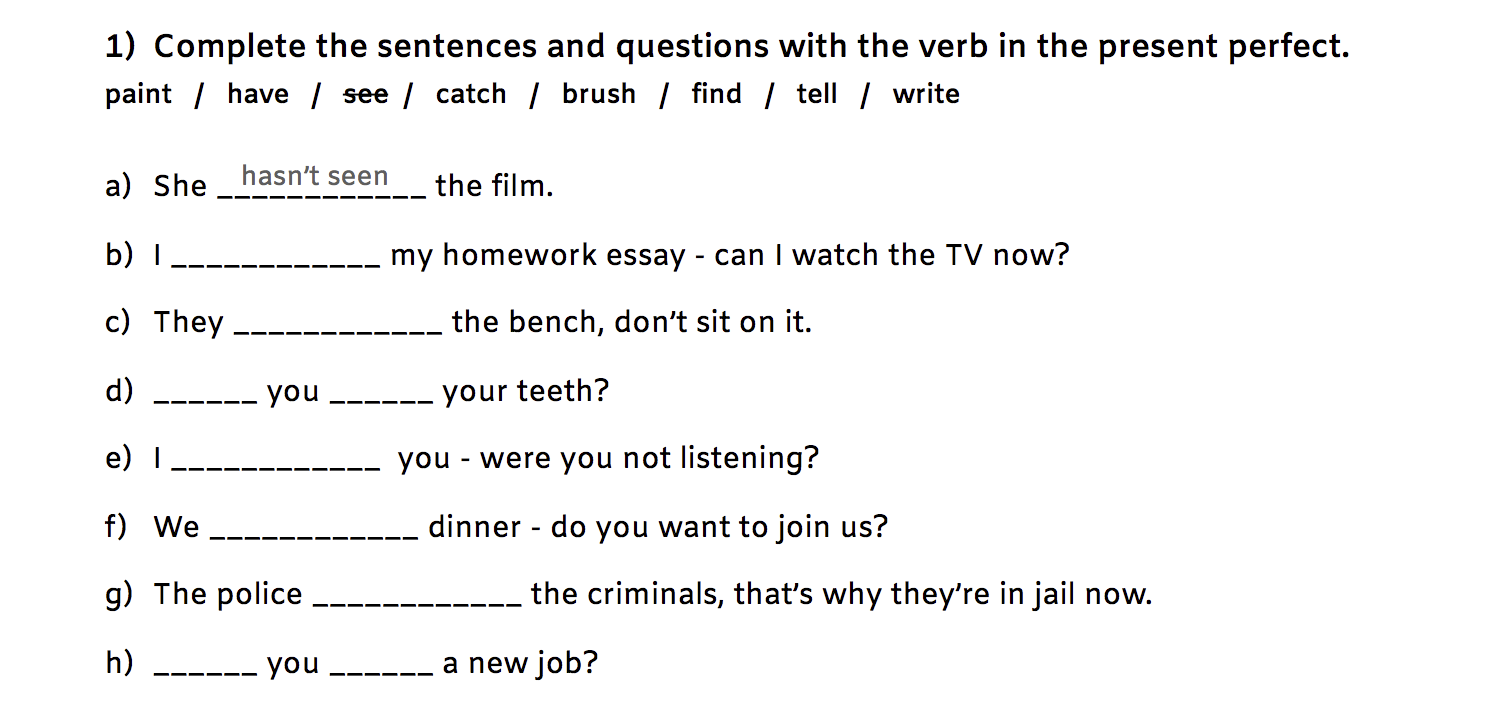
This worksheet lets students review past participles, and it gives students the opportunity to practise present perfect with “yet, just, already”. In the first exercise students need ...
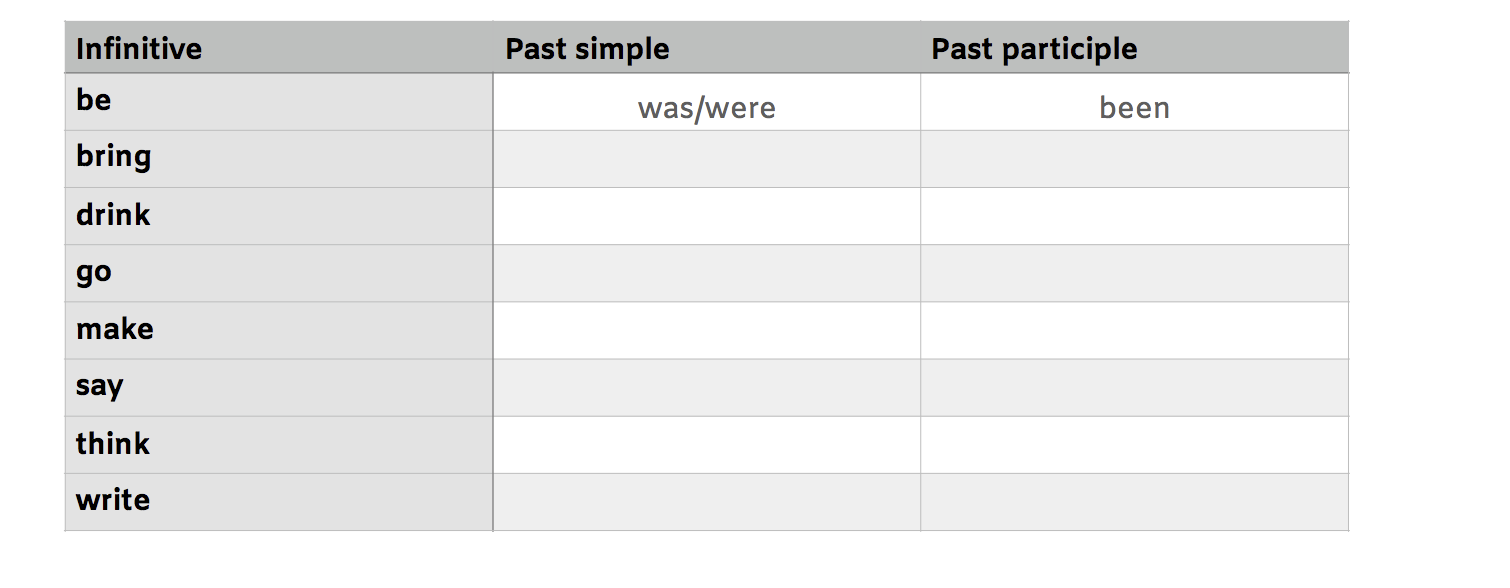
This worksheet lets students review common irregular verbs and gives them the opportunity to practise the form of present perfect. In the first exercise students complete a table with the past si ...
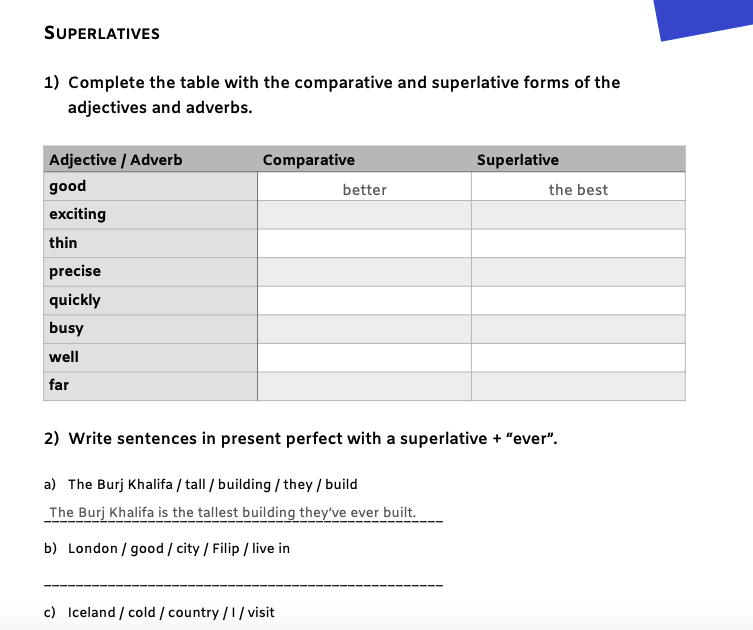
This worksheets lets students revisit the form of superlatives and their use with present perfect with “ever”. In the first exercise students complete a table with the correct compara ...
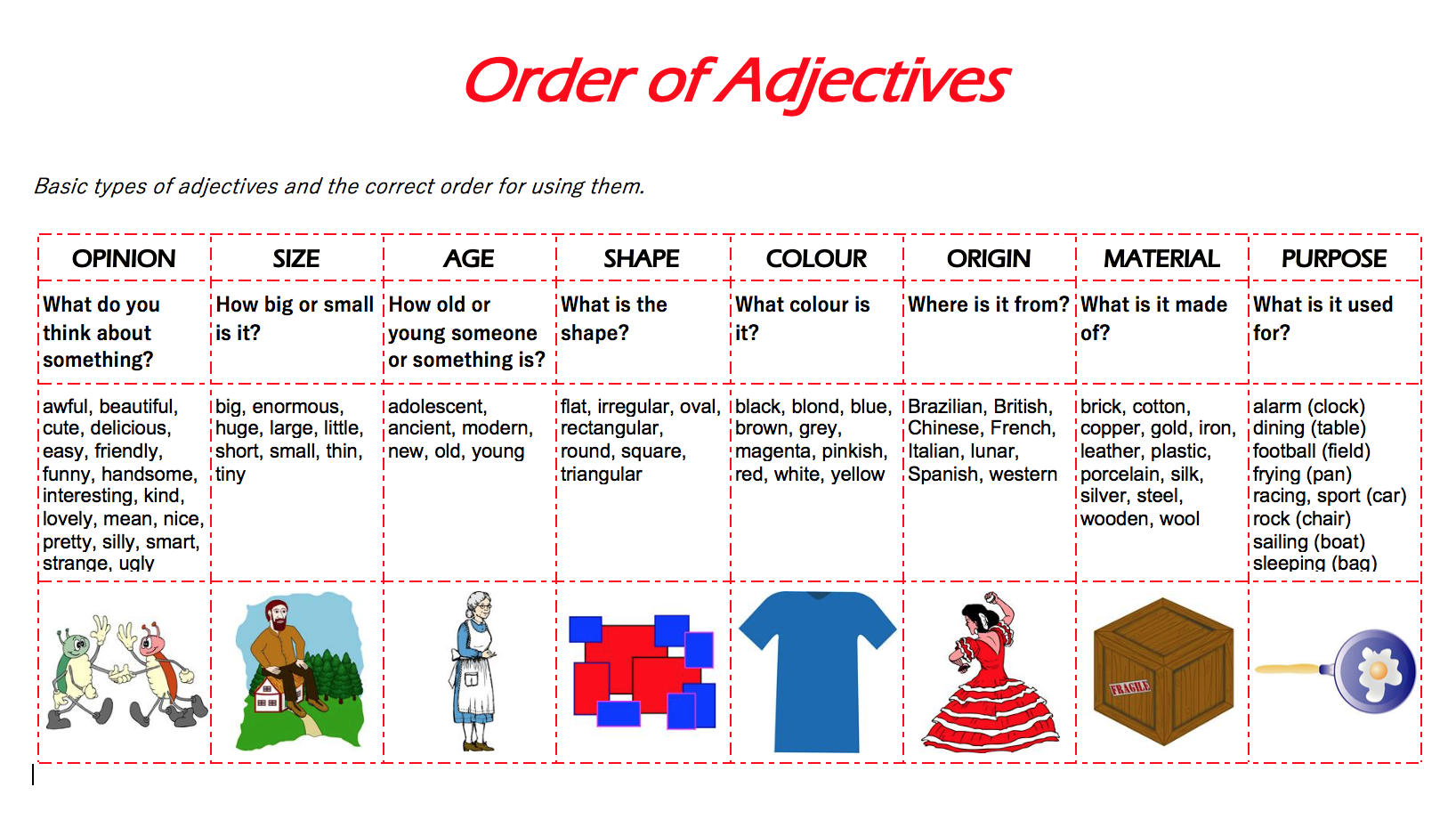
This is a grammar-guide about the order of adjectives (describing objects). It’s an explanation on how to use several adjectives in front of a noun. With some examples and a few illustratio ...
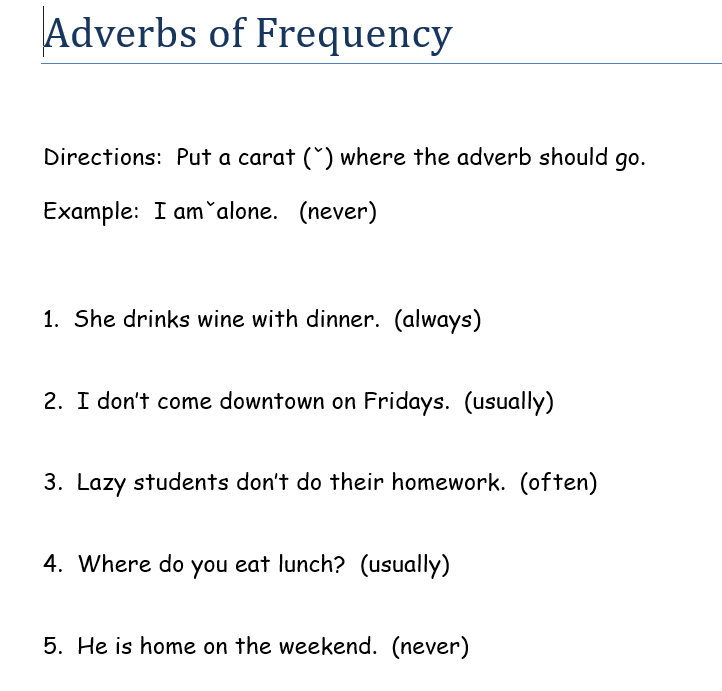
This is a quick and easy exercise of adverbs of frequency. It has both the verb be and regular verbs, so the teacher should have already explained the difference in adverb placement. The student ...
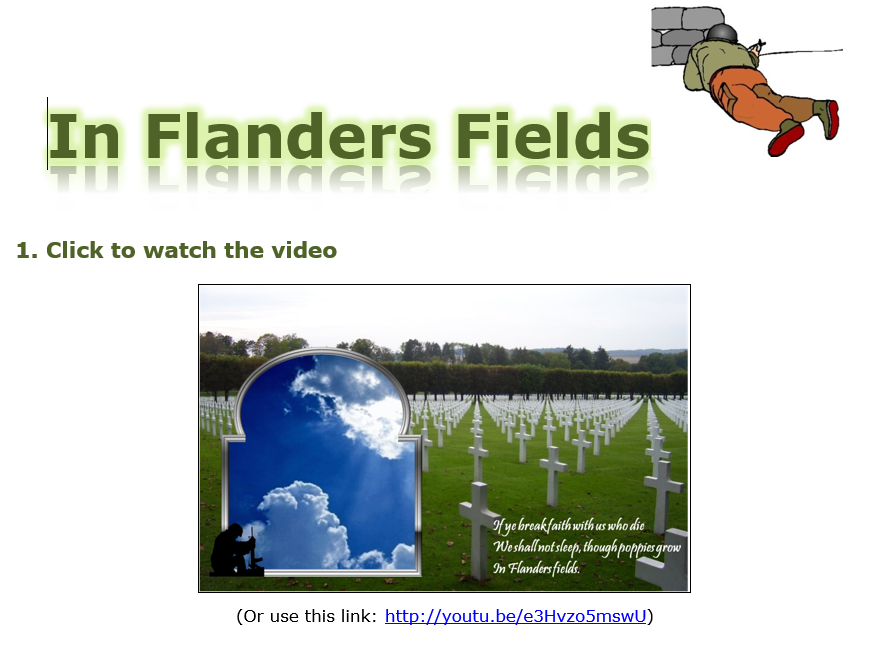
This is the famous poem written by Lt. John McCrae during World War I (1915). I've made a worksheet with six exercises to learn to understand the poem. You can watch the video, do the exercises (w ...
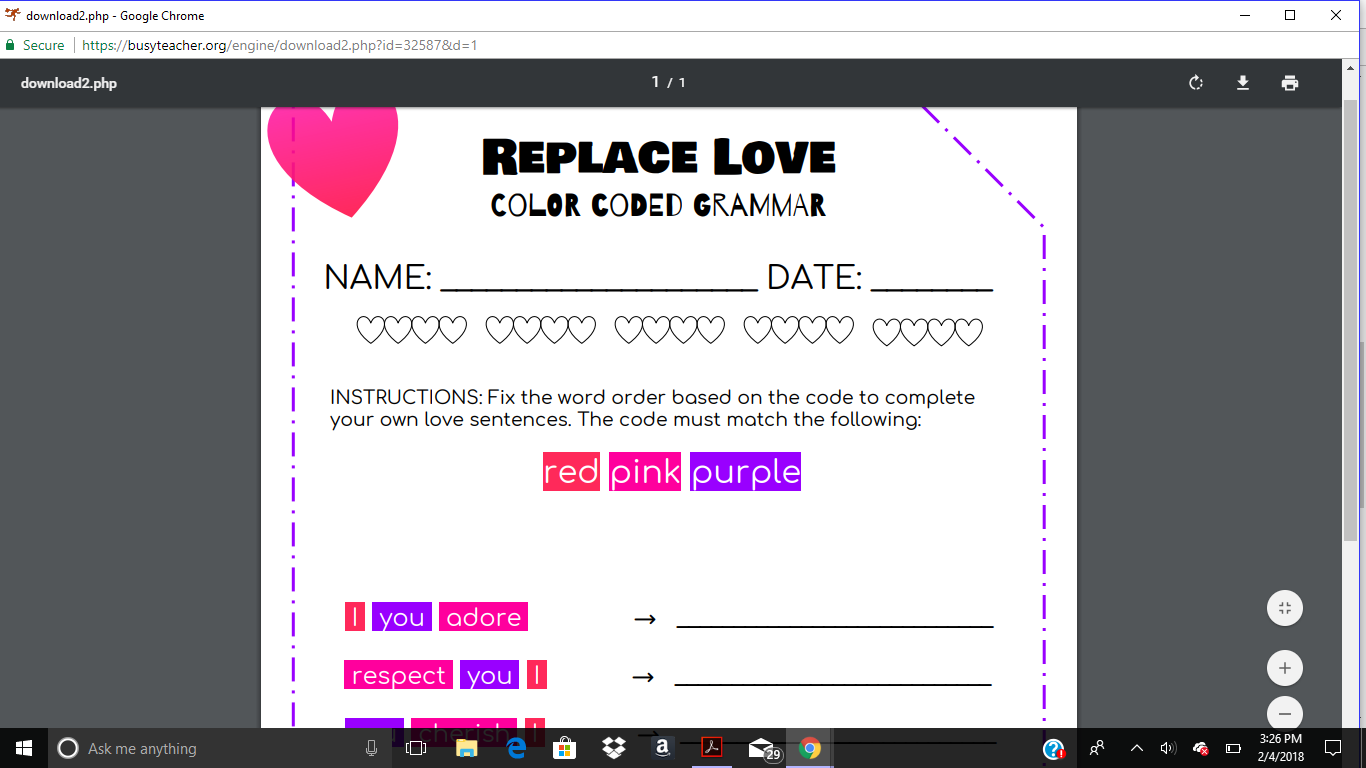
Color-coded grammar activities are great for visual learners so they can see how the order of words should look. Use this Valentine's Day themed color-coded grammar worksheet to get students seein ...
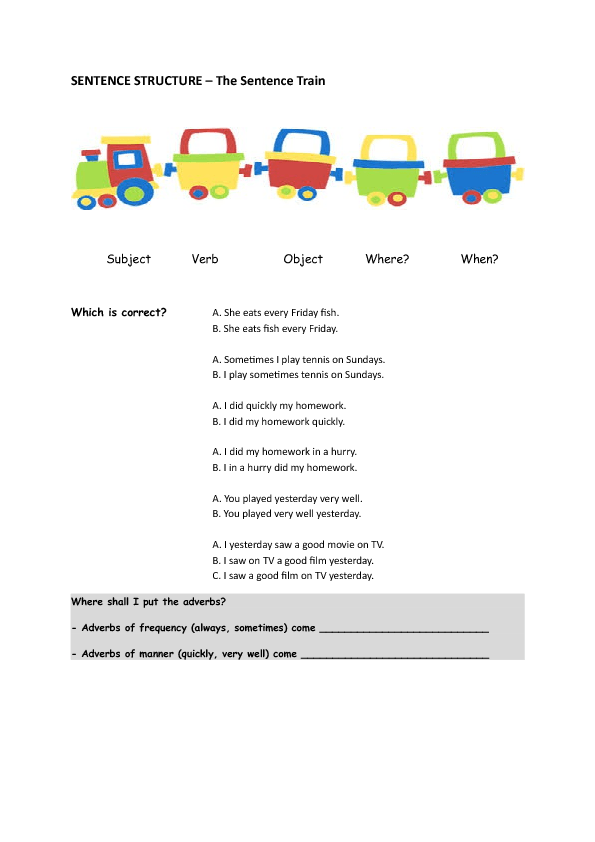
This worksheet teaches your beginner students the rules of forming English sentences, focusing mainly on the subject-verb position. Kids (and adults, too) love the image of the train and the idea ...
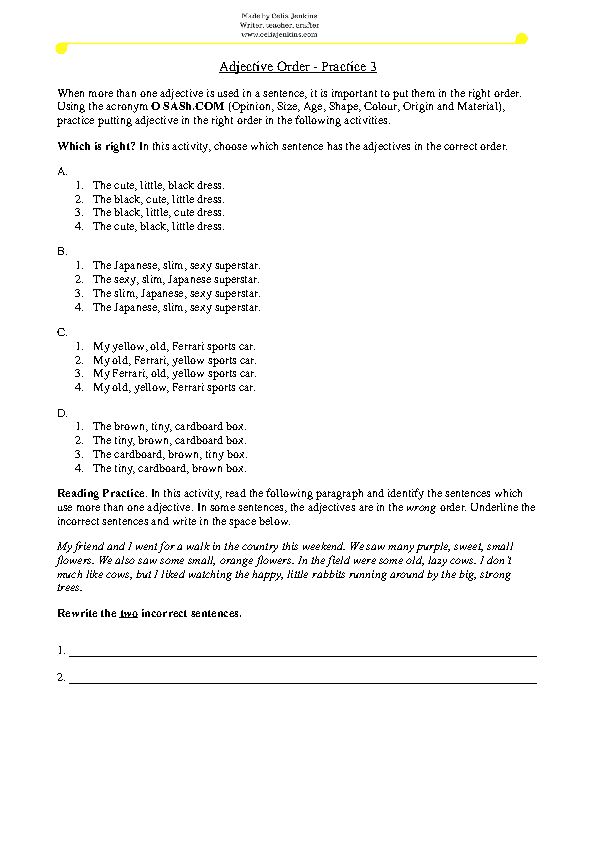
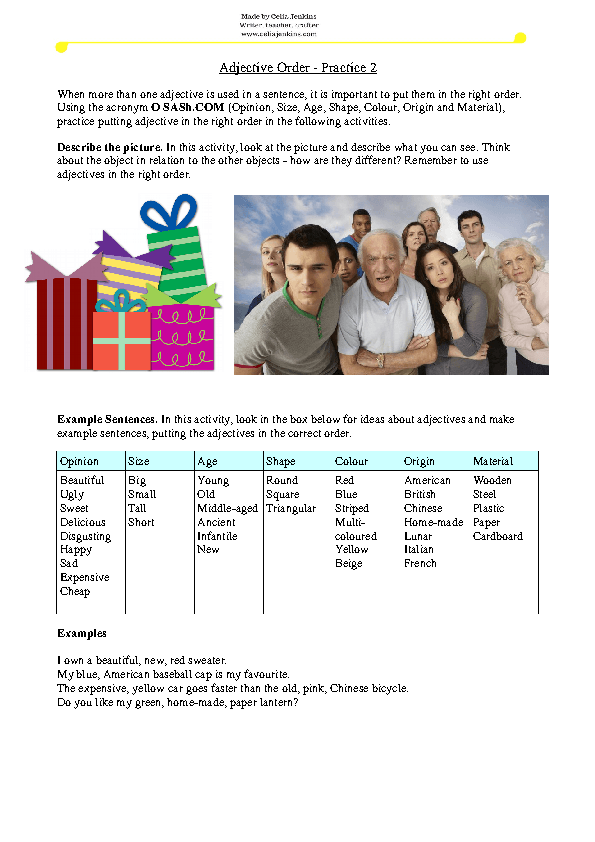
When more than one adjective is used in a sentence, it is important to put them in the right order. Using the acronym O SASh.COM, students can practice putting adjectives in the right order. There ...
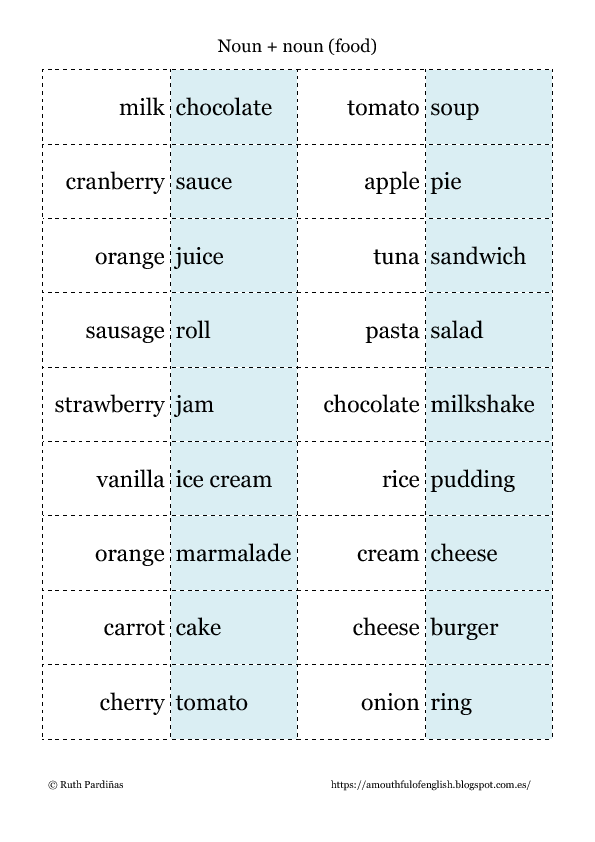
This worksheet can be used to practise 'noun + noun' collocations and help students understand the importance of word order in this kind of structure using some common food vocabulary. The words c ...
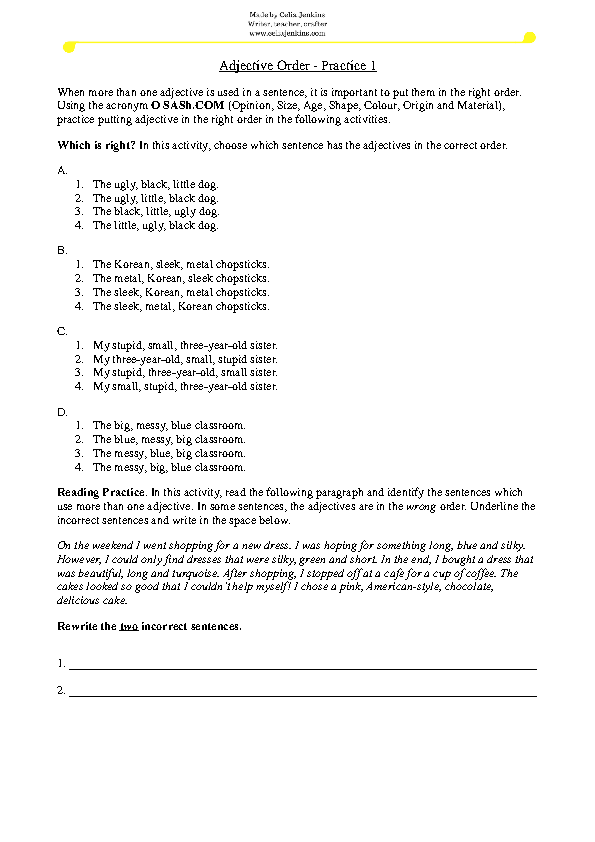
When more than one adjective is used in a sentence, it is important to put them in the right order. Using the acronym O SASh.COM, students can practice putting adjectives in the right order. This ...
When more than one adjective is used in a sentence, it is important to put them in the right order. Using the acronym O SASh.COM, students can practice putting adjectives in the right order. There ...
A worksheet to practice the present simple and sentence structure. In the video there is a short explanation of word order in English plus an activity similar to the one in the worksheet with 10 ...
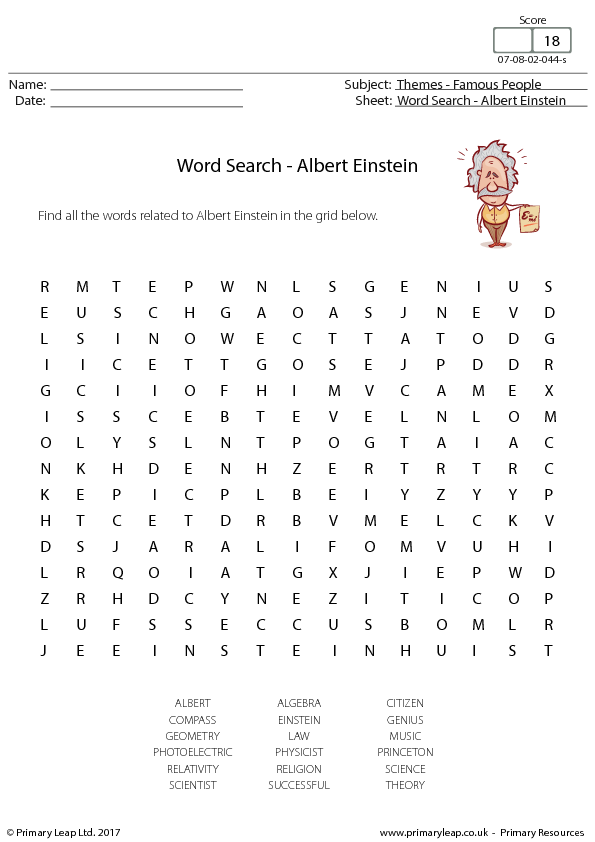
We have created a fun word search for your students to enjoy. There are eighteen words hidden in the grid that are all associated with Albert Einstein. Students try and find all of the words hidde ...
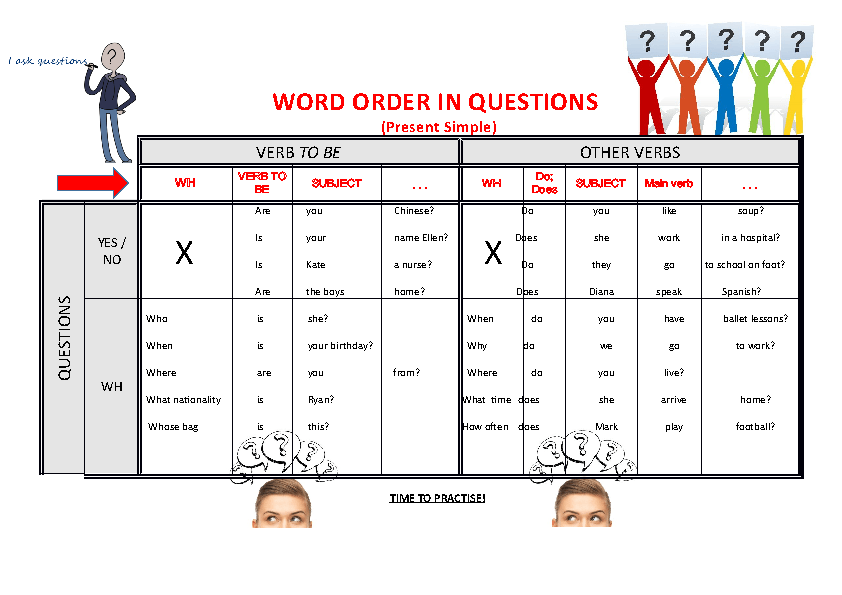
First there is an explanation of how to ask questions in present simple using the verb to be and other verbs. Then there are exerices to support the theory. The answers are provided and it i ...
This is a great worksheet for practising questions with elementary students. They have to create questions with given words and tips. Print it on the color paper, cut it, make it one column ...
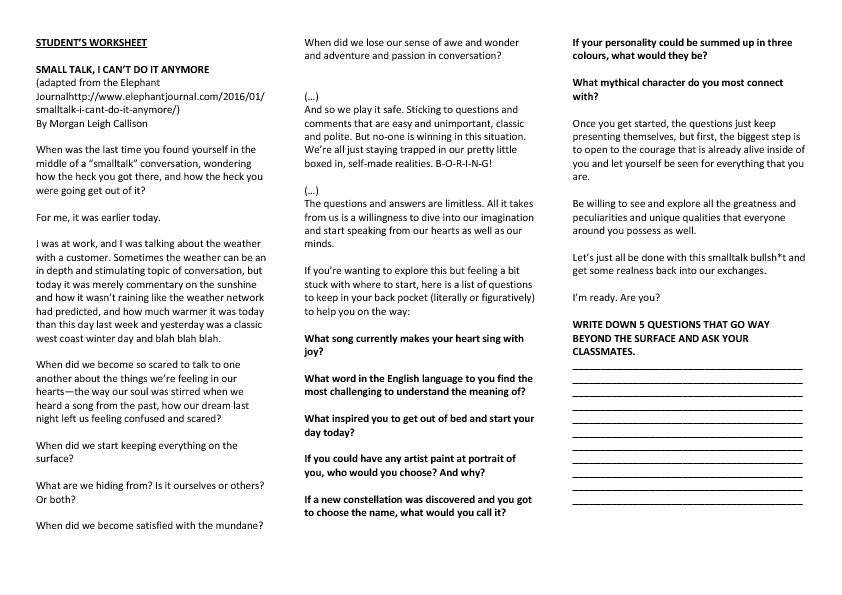
This speaking activity is based on an article from The Elephant Journal entitled "Small Talk: I can't do it anymore" by Morgan L. Callison. We ask ss to say what they understand by "small talk" an ...
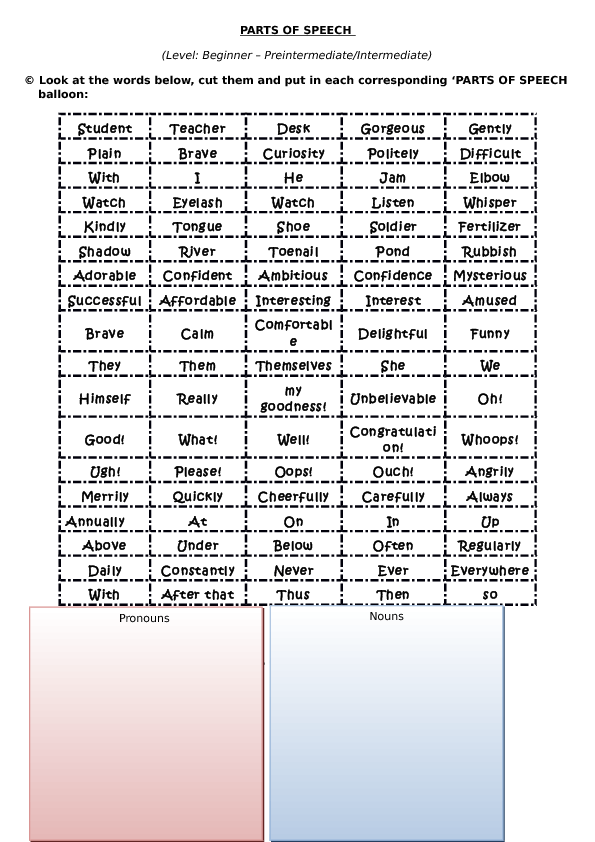
This worksheet is for the students practice activity about parts of speech. Before giving it to them, make sure that they are already familiar with the words, however translating beforehand is pos ...
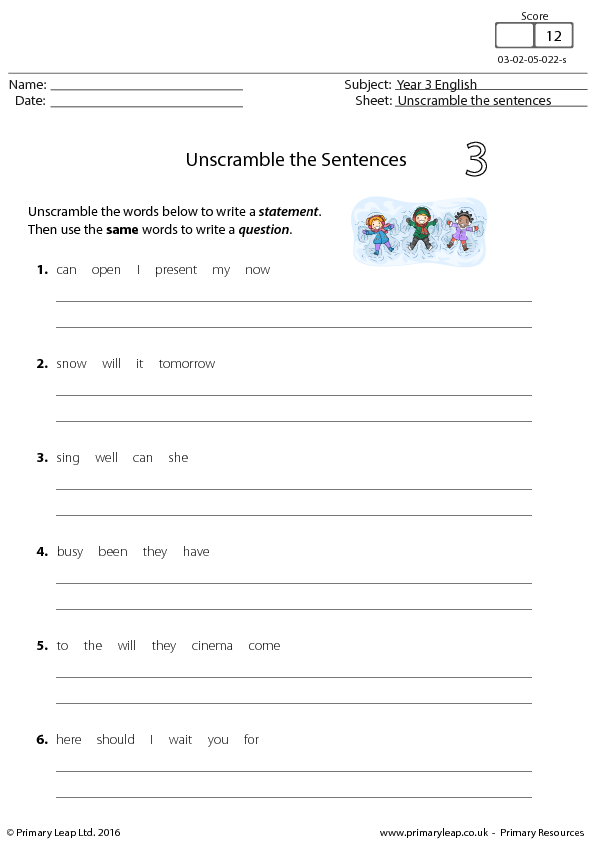
English resource: unscramble the sentences. This multi-step worksheet will help children practice their sentence building. Students unscramble the words to write a statement. They then use the sam ...
English resource: unscramble the sentences. This multi-step worksheet will help children practice their sentence building. Students unscramble the words to write a statement. They then use the sam ...
3 19,780Elem
Got a great worksheet on
Word Order?
Tell us about it and become a BusyTeacher contributor!






 12,602